Website vs Landing Page: Which One Is Better for Your Business?
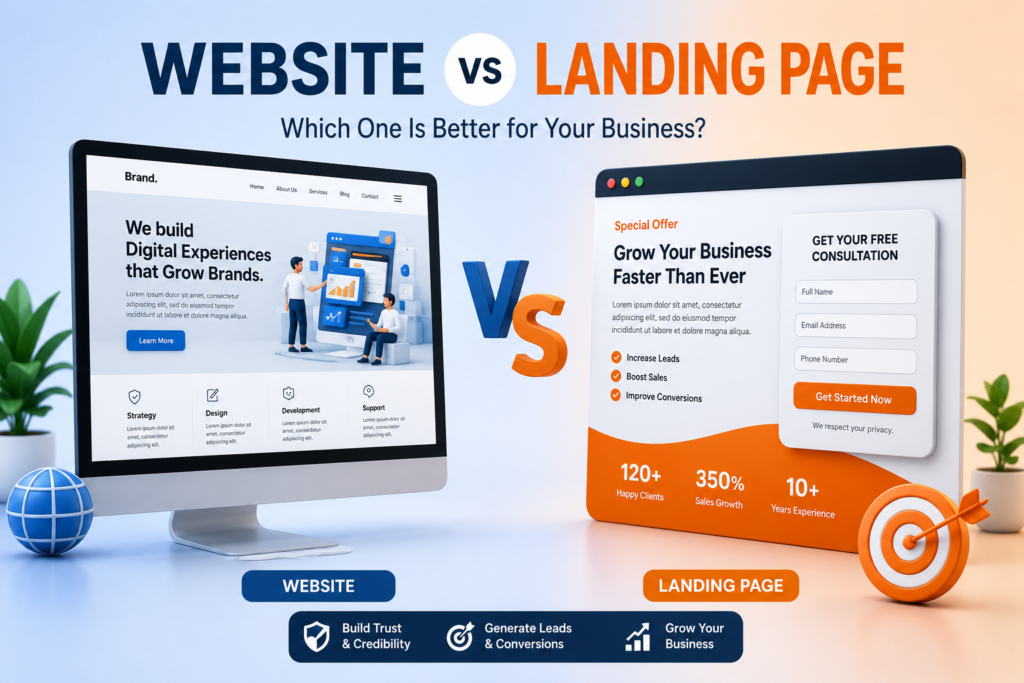
Choosing between a website and a landing page is one of the most common questions business owners ask when building an online presence. While both play an important role in digital marketing, they serve different purposes. A website helps establish your brand and provides visitors with detailed information, while a landing page is designed to achieve one specific goal, such as generating leads or increasing sales.
If you’re unsure whether your business needs a website, a landing page, or both, this guide will help you understand the differences. By the end of this article, you’ll know which option best suits your marketing goals and how to use them effectively together.
What Is a Website?
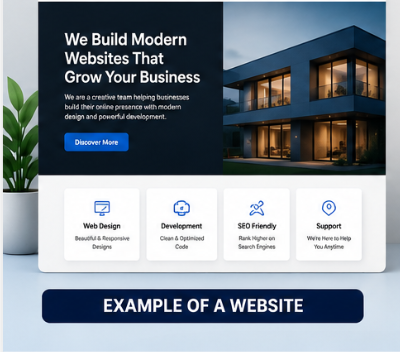
A website is a collection of multiple web pages connected through a navigation menu. It acts as your business’s digital headquarters where customers can learn about your company, services, products, blog, and contact information.
A website, as opposed to a landing page, is intended to give users a comprehensive experience.
Key Features of a Website
- Multiple pages such as Home, About, Services, Blog, and Contact
- Easy navigation between pages
- SEO-friendly structure
- Long-term online presence
- Suitable for businesses of all sizes
A well-designed website builds trust and gives visitors everything they need to learn about your business.
Benefits of Having a Website
A professional website offers several advantages:
- Builds credibility and trust
- Improves visibility on search engines
- Showcases your products and services
- Helps customers contact your business easily
- Supports content marketing through blogs
- Works as a 24/7 online storefront
For businesses focused on long-term growth, a website is an essential investment.
What Is a Landing Page?
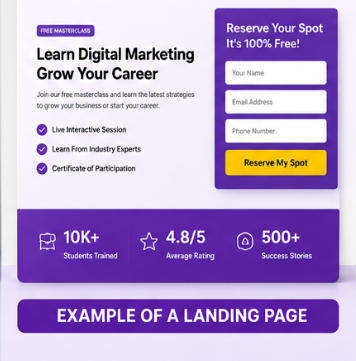
A landing page is a single webpage designed for a single purpose. Unlike a website, it removes distractions and encourages visitors to complete one action.
That action could be:
- Filling out a contact form
- Booking a consultation
- Downloading an eBook
- Signing up for a webinar
- Purchasing a product
Because landing pages are made to increase conversions, they are frequently utilized in paid advertising campaigns.
Key Features of a Landing Page
- Single-page design
- One clear call-to-action (CTA)
- Minimal or no navigation
- Focused messaging
- Lead capture forms
- Conversion-optimized layout
Because visitors have fewer distractions, landing pages often achieve higher conversion rates than standard website pages.
Benefits of a Landing Page
Landing pages help businesses:
- Generate more leads
- Increase sales
- Improve advertising performance
- Track campaign results
- Test different headlines and offers
A landing page is frequently a preferable option if your objective is to rapidly convert visitors into clients.If your goal is to convert visitors into customers quickly, a landing page is often the better choice.
Website vs Landing Page: Key Differences
Although they may appear similar, websites and landing pages are built for different purposes.
| Feature | Website | Landing Page |
|---|---|---|
| Purpose | Build brand and provide information | Generate leads or sales |
| Number of Pages | Multiple | Single |
| Navigation | Yes | Usually none |
| SEO Potential | Excellent | Limited but possible |
| Best For | Long-term growth | Marketing campaigns |
| Conversion Rate | Moderate | Usually higher |
| Content | Detailed | Focused |
| User Journey | Multiple options | One clear action |
The biggest difference is intent.
A landing page directs visitors toward a single activity, whereas a website allows them to browse your brand.
When Should You Choose a Website?
A website is the right choice if your business wants to build a strong online presence.
It works best when you want to:
- Showcase multiple services
- Publish blog articles
- Improve Google rankings through SEO
- Build customer trust
- Display testimonials and case studies
- Share company information
Example
Imagine you own a digital marketing agency.
Your website can include:
- Home page
- About Us
- Services
- Portfolio
- Blog
- Pricing
- Contact
This allows potential customers to learn everything about your business before contacting you.
When Should You Choose a Landing Page?
If you want to increase conversions, a landing page is the best option.
Use a landing page for:
- Google Ads campaigns
- Facebook and Instagram Ads
- Email marketing
- Product launches
- Free consultation offers
- Event registrations
- Lead generation campaigns
Example
Suppose you’re running Google Ads for Website Design Services.
Make a special landing page containing the following instead of directing users to your homepage:
- A compelling headline
- Benefits of your service
- Customer testimonials
- Portfolio highlights
- Contact form
- A compelling call to action, such “Get Your Free Quote Today”
This focused approach usually converts better because visitors stay focused on one action instead of browsing multiple pages.
Website vs Landing Page for SEO
Which choice is best for SEO is a question that many business owners have.
The answer depends on your objective.
In general, a website is superior for long-term SEO since it enables you to:
- Publish regular blog posts
- Target multiple keywords
- Build topical authority
- Earn backlinks
- Improve internal linking
- Grow organic traffic over time
Landing pages can also rank on Google, especially when they target a specific keyword and provide valuable content. However, they usually perform best when paired with paid advertising or targeted campaigns.
Website vs Landing Page for Lead Generation
When it comes to generating leads, landing pages usually outperform traditional website pages. That’s because they are built with a single purpose—encouraging visitors to take one specific action.
A landing page removes unnecessary distractions such as multiple navigation links, making it easier for users to focus on your offer.
Why Landing Pages Convert Better
Landing pages are designed using conversion-focused elements, including:
- Clear and compelling headlines
- One strong call-to-action (CTA)
- Simple contact or inquiry forms
- Customer testimonials and trust badges
- Eye-catching visuals
- Mobile-friendly layouts
These elements work together to increase the chances of turning visitors into leads or customers.
On the other hand, websites are excellent for educating visitors, building trust, and helping potential customers explore your business before making a decision.
Can You Use Both Together?
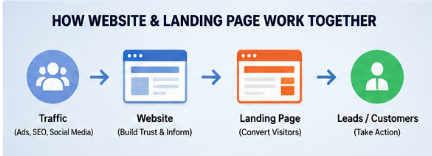
Absolutely! In fact, using both a website and landing pages is one of the smartest digital marketing strategies.
Think of it this way:
- Your website builds trust, showcases your expertise, and improves your SEO.
- Your landing pages focus on converting visitors from advertising campaigns, email marketing, and promotions.
Example Strategy
Imagine you own a web design agency.
Your website helps visitors:
- Learn about your services
- Read blog articles
- View your portfolio
- Contact your team
At the same time, you create dedicated landing pages for:
- Website Design Services
- SEO Services
- Google Ads Campaigns
- Free Website Audit
- E-commerce Development
Each landing page targets a specific audience and encourages one clear action, leading to higher conversion rates.
Using both together creates a smooth customer journey—from discovering your business to becoming a paying client.
Common Mistakes to Avoid
Whether you’re building a website or a landing page, avoiding these mistakes can improve your results.
1. Sending Ad Traffic to the Homepage
If you’re running paid ads, sending visitors to your homepage can reduce conversions. A dedicated landing page is usually a better choice because it matches the ad’s message.
2. Too Many Distractions
Avoid cluttered layouts, unnecessary links, or multiple CTAs. Keep visitors focused on one primary goal.
3. Ignoring Mobile Users
More than half of web traffic comes from mobile devices. Ensure your pages load quickly and look great on every screen size.
4. Weak Call-to-Action
Instead of generic buttons like “Submit”, use action-driven text such as:
- Get My Free Quote
- Book a Free Consultation
- Start Your Project Today
- Download the Free Guide
5. Not Tracking Performance
Use tools like Google Analytics and Google Search Console to monitor traffic, user behavior, and conversions. Regular analysis helps you improve results over time.
Best Practices for Maximum Results
Website Best Practices
To build a successful website:
- Create a clean and intuitive navigation.
- Optimize every page for SEO.
- Improve page loading speed.
- Publish valuable blog content regularly.
- Include customer reviews and testimonials.
- Use high-quality visuals.
- Keep your design responsive for all devices.
Landing Page Best Practices
To increase conversions:
- Focus on one clear goal.
- Write a compelling headline.
- Highlight the benefits of your offer.
- Use persuasive copy with short paragraphs.
- Add trust signals like testimonials and client logos.
- Keep forms short and simple.
- Use one strong call-to-action throughout the page.
Following these best practices can significantly improve user experience and conversion rates.
Frequently Asked Questions (FAQs)
Is a website inferior to a landing page?
Not necessarily. A landing page is better for specific marketing campaigns and lead generation, while a website is better for building your brand, improving SEO, and providing detailed information.
Can I have a landing page without a website?
Indeed. Before building a complete website, many companies start landing pages for advertising campaigns, product debuts, or promotions.
Which is better for SEO?
A website is generally better for long-term SEO because it supports multiple pages, blog content, and internal linking. Landing pages can rank for targeted keywords but are usually focused on conversions.
Which is better for Google Ads?
Landing pages are the preferred choice because they are designed to match the ad’s intent and encourage visitors to take immediate action.
Do small businesses need both?
Yes. A website builds credibility and organic visibility, while landing pages help convert traffic from ads, social media, and email campaigns into leads and customers.
Conclusion
Choosing between a website vs landing page isn’t about deciding which one is better overall—it’s about understanding what your business needs.
If your goal is to build a strong online presence, improve search engine rankings, and establish credibility, a professional website is the right choice.
If your objective is to generate leads, increase sales, or maximize the return on your advertising campaigns, a dedicated landing page will often deliver better results.
The ideal approach for the majority of firms is to combine the two. Your website serves as the foundation of your online presence, while landing pages help you achieve higher conversions for specific campaigns.
By combining the strengths of both, you can attract more visitors, build trust, improve your SEO, and turn more potential customers into loyal clients.
Need a professional website or a high-converting landing page? At RiseWeb, we create fast, SEO-friendly, and conversion-focused digital experiences that help businesses grow online. If you’re ready to start your project, visit our Contact Us page and get a free consultation today.
Website vs Landing Page Website vs Landing Page Website vs Landing Page Website vs Landing Page Website vs Landing Page Website vs Landing Page Website vs Landing Page Website vs Landing Page Website vs Landing Page Website vs Landing Page Website vs Landing Page Website vs Landing Page Website vs Landing Page