Digital Marketing Agency in Yamunanagar offering SEO, website development, Google Ads, social media marketing and branding services by RiseWeb
Uncategorized

Digital Marketing Agency in Yamunanagar

Digital Marketing Agency in Yamunanagar: The Complete Guide to Growing Your Business Online in 2026 In today’s digital world, customers rarely make a purchase without first searching online. Their journey typically starts with a Google search, regardless of whether they require a restaurant, clothes store, coaching center, hospital, or home service.. If your business isn’t visible online, you’re likely missing valuable customers every day. This is where a Digital Marketing Agency in Yamunanagar becomes an important partner. A professional agency helps businesses increase their online visibility, attract the right audience, generate quality leads, and grow revenue using proven digital strategies. Whether you’re a startup, local shop, service provider, or established company, digital marketing gives you the opportunity to compete with larger brands without spending a fortune on traditional advertising. In this complete guide, you’ll learn: Let’s begin. What Is a Digital Marketing Agency? A digital marketing agency is a team of professionals who help businesses promote their products and services through online channels. Instead of relying only on newspapers, TV, or billboards, businesses use digital platforms like Google, social media, websites, and email to reach potential customers. The goal isn’t just to get more website visitors. A good agency focuses on attracting the right audience, building trust, and converting visitors into paying customers. Understanding Digital Marketing Digital marketing includes every online activity that helps promote a business. It combines multiple strategies to improve visibility, increase traffic, and generate sales. Some of the most effective digital marketing methods include: In contrast to traditional marketing, digital marketing enables companies to measure outcomes precisely. You can track website visitors, conversions, clicks, leads, and return on investment in real time. Traditional Marketing vs Digital Marketing Traditional Marketing Digital Marketing Newspaper Ads Google Search TV Commercials YouTube Ads Flyers & Pamphlets Social Media Difficult to Track Easy Performance Tracking Higher Cost Budget Friendly Limited Audience Global & Local Reach Slow Results Faster Optimization Businesses today prefer digital marketing because it offers better targeting, measurable results, and a higher return on investment. Why Businesses in Yamunanagar Need Digital Marketing Yamunanagar is growing rapidly. Every year, more businesses are entering the market, making competition stronger than ever. Customers now compare products, read reviews, and search online before making buying decisions. If your business doesn’t appear in search results, customers may choose your competitors instead. Here are some reasons why digital marketing has become essential: 1. Most Customers Search Online First When someone needs a service, they often search: If your business appears on the first page of Google, you have a much better chance of getting inquiries. 2. Local Businesses Can Compete with Bigger Brands One of the biggest advantages of digital marketing is that small businesses can compete effectively with larger companies. With the right SEO strategy, high-quality content, and local optimization, even a small business can rank above larger competitors in local search results. 3. Better Customer Targeting Digital marketing allows you to reach people who are already interested in your services. For example: This improves conversion rates while reducing advertising costs. 4. Cost-Effective Marketing Traditional advertising often requires a large budget. Digital marketing offers flexible options suitable for businesses of every size. Some affordable marketing methods include: Even with a modest budget, businesses can achieve meaningful results. 5. Measurable Results One of the greatest strengths of digital marketing is transparency. Business owners can monitor: These insights make it easier to refine campaigns and maximize ROI. Benefits of Hiring a Digital Marketing Agency in Yamunanagar Working with professionals saves time, reduces guesswork, and helps businesses achieve better outcomes. Some key benefits include: ✔ Better Google rankings ✔ More qualified leads ✔ Increased brand awareness ✔ Improved website performance ✔ Higher conversion rates ✔ Better social media presence ✔ Consistent business growth ✔ Stronger local visibility ✔ Access to marketing experts ✔ Better return on investmen How Digital Marketing Helps Local Businesses Grow Different industries can benefit from digital marketing in different ways. Business Type Digital Marketing Benefits Restaurants Online orders & reviews Schools Student admissions Doctors Appointment bookings Gyms Membership inquiries Retail Shops Local customer traffic Real Estate Property leads Salons Online bookings Coaching Institutes Student registrations No matter your industry, a tailored digital marketing strategy can help you reach more potential customers and strengthen your brand Services Offered by a Digital Marketing Agency in Yamunanagar A professional Digital Marketing Agency in Yamunanagar doesn’t rely on a single strategy. Instead, it combines multiple digital marketing techniques to help businesses build a strong online presence, attract qualified customers, and increase sales. Let’s explore the key services that can make a real difference for your business. Search Engine Optimization (SEO) SEO (Search Engine Optimization) is one of the most powerful long-term digital marketing strategies. It increases the visibility of your website in Google search results when prospective clients look for the goods or services you provide. For example, if someone searches “Digital Marketing Agency in Yamunanagar”, SEO helps your website rank higher, increasing the chances of getting clicks and inquiries. Benefits of SEO A well-optimized website continues bringing visitors even months after the initial work is completed. Local SEO For businesses serving a specific city like Yamunanagar, Local SEO is essential. It focuses on helping your business appear in local search results and Google Maps. For example: Local SEO Includes Benefits ✔ More local customers ✔ Better Google Maps rankings ✔ Increased phone calls ✔ Higher foot traffic ✔ Greater trust among nearby customers Website Design & Development Customers frequently get their initial impression of your company from your website. A slow or out-of-date website can drive users away in a matter of seconds. A professional website should be: Essential Website Features A professionally designed website works as your digital salesperson—available 24/7 to inform visitors and generate leads. Google Ads (Pay-Per-Click Advertising) While SEO takes time to build momentum, Google Ads can deliver traffic almost immediately. Google Ads show your company to people who are actively looking for similar services. Advantages Businesses often use Google Ads
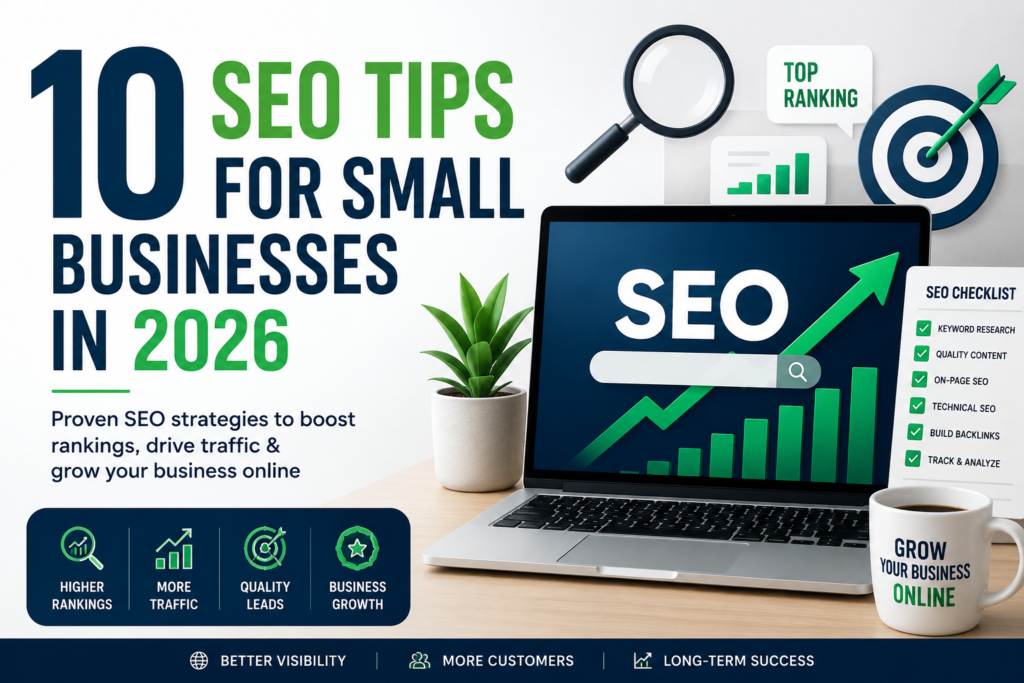
10 SEO Tips for Small Businesses in 2026 with SEO growth chart and digital marketing illustration
Uncategorized

10 SEO Tips for Small Businesses in 2026: A Complete Digital Marketing Guide

10 SEO Tips for Small Businesses in 2026: A Complete Digital Marketing Guide Introduction Running a small business in 2026 is more challenging than ever. Customers search online before making almost every buying decision, whether they need a local service, an online store, or a professional agency. If your business isn’t visible on search engines, you’re likely missing out on valuable leads every day. Search Engine Optimization (SEO) makes your website more visible to those who are already looking for your goods or services. Unlike paid advertising, SEO can continue bringing visitors long after your content is published, making it one of the most cost-effective digital marketing strategies for small businesses. The good news is that you don’t need a huge marketing budget to succeed. By applying the right SEO practices consistently, you can improve your rankings, attract targeted visitors, and build trust with potential customers. In this guide, you’ll discover ten practical SEO tips that can help your small business grow online in 2026. Why SEO Matters for Small Businesses in 2026 Many small business owners believe SEO is only for large companies with dedicated marketing teams. That’s no longer true. Modern SEO gives smaller businesses the opportunity to compete by creating valuable content and delivering a great user experience. Here are some of the biggest benefits of SEO: Comparison Chart SEO Paid Advertising Long-term traffic that terminates when the budget is depleted Builds credibility Instant visibility Lower long-term cost Higher ongoing cost Sustainable growth Short-term results 1. Focus on Search Intent Instead of Just Keywords Many businesses make the mistake of choosing keywords without understanding what people actually want. Modern SEO is about solving problems—not simply inserting keywords into a page. For instance, a person looking for “best website design company for startups” wants suggestions and trustworthy data. Someone searching for “hire website designer” is ready to purchase. Understanding this difference helps you create content that matches the visitor’s needs. Tips Search engines are more inclined to give your content higher results when it fulfills user intent. 2. Target Long-Tail Keywords Trying to rank for broad keywords like SEO or Digital Marketing can be extremely competitive. Instead, focus on long-tail keywords. These phrases are more specific and usually have less competition while attracting visitors who are closer to making a decision. Examples Benefits of Long-Tail Keywords Publishing multiple articles around related long-tail topics also helps build topical authority, making your website stronger over time. 3. Optimize Your Google Business Profile Local SEO should be a top focus if your company caters to clients in a particular city or area.. Your chances of showing up in local search results and Google Maps are increased with a well-optimized Google Business Profile. Make sure your profile includes: Pro Tip Encourage satisfied customers to leave honest reviews.Good evaluations increase credibility and have the power to affect rankings and consumer choices. 4. Improve Website Speed and User Experience No one likes to wait for a website to load slowly. Users frequently abandon websites that take too long to load, according to research. Search engines also consider page experience when evaluating websites. Ways to improve website speed A fast website keeps visitors engaged and improves the likelihood that they’ll explore more pages. 5. Create Helpful and Original Content One of the most powerful ranking variables in SEO is still content. Instead of publishing articles just to target keywords, focus on providing genuine value. Ask yourself: Does this article answer the reader’s question better than competing pages? You’re headed in the correct way if the response is “yes.” Create content that: Content Ideas Publishing consistent, high-quality content not only improves search rankings but also establishes your business as a trusted authority in your industry. 6. Optimize Every Page with On-Page SEO Creating great content is only half the job. Additionally, you must make it simple for search engines to comprehend every page on your website.This process is known as on-page SEO. A well-optimized page gives visitors a better experience and increases your chances of ranking higher. Best On-Page SEO Practices Pro Tip: Review older articles every few months and update outdated information. Fresh content often performs better in search results. 7. Build High-Quality Backlinks Backlinks are links pointing to your website from other websites. They act like recommendations, showing search engines that your content is valuable and trustworthy. However, quality is far more important than quantity. Hundreds of poor-quality links are far less valuable than a few from trustworthy sources. Safe Ways to Earn Backlinks Avoid These Mistakes Although it takes time to build backlinks, they are still one of the most powerful signals for increasing search visibility.. 8. Make Your Website Mobile-Friendly Today, most people browse the internet using smartphones.Visitors may abandon your website before they have a chance to explore your material if it is not optimized for mobile devices. A responsive website makes it simpler for consumers to navigate by automatically adjusting to various screen sizes. Mobile SEO Checklist Both user satisfaction and search performance are enhanced by a mobile-friendly website. 9. Use AI and SEO Tools Wisely Artificial intelligence has become an important part of digital marketing, helping businesses save time and discover new opportunities. AI can assist with: However, AI should support your work—not replace your expertise. Always review, edit, and fact-check AI-generated content before publishing. Readers appreciate authentic insights, examples, and practical advice that reflect real experience. Useful SEO Tools Tool Purpose Google Search Console Track search results Google Analytics 4 Analyze website traffic Find keyword ideas Google Keyword Planner Ahrefs Backlink and competitor research Semrush Complete SEO analysis Screaming Frog Technical SEO audits 10. Measure and Improve Your SEO Performance SEO isn’t a one-time task. The best-performing websites continuously measure results and improve their content. You can determine what is effective and where modifications are required with regular monitoring. Track important metrics such as: Utilize this data to develop your entire SEO strategy, update pages, and enhance the quality of your content. Common SEO Mistakes Small Businesses

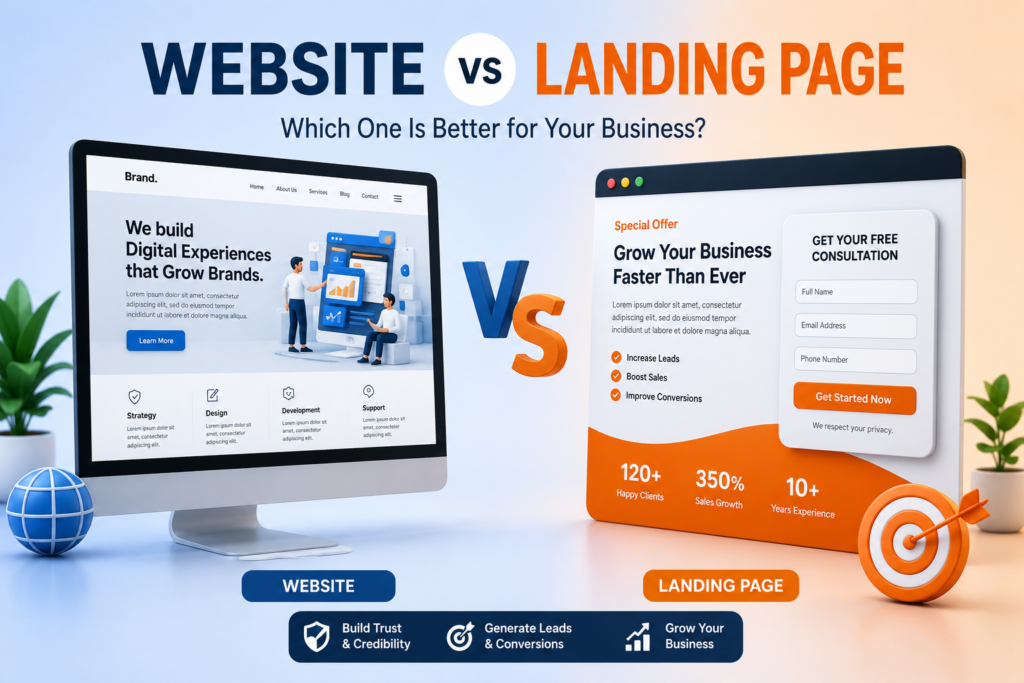
Website vs Landing Page comparison in 3D showing the key differences for digital marketing and business growth
Digital Marketing

Website vs Landing Page: Which One Is Better for Your Business?

Website vs Landing Page: Which One Is Better for Your Business? Choosing between a website and a landing page is one of the most common questions business owners ask when building an online presence. While both play an important role in digital marketing, they serve different purposes. A website helps establish your brand and provides visitors with detailed information, while a landing page is designed to achieve one specific goal, such as generating leads or increasing sales. If you’re unsure whether your business needs a website, a landing page, or both, this guide will help you understand the differences. By the end of this article, you’ll know which option best suits your marketing goals and how to use them effectively together. What Is a Website? A website is a collection of multiple web pages connected through a navigation menu. It acts as your business’s digital headquarters where customers can learn about your company, services, products, blog, and contact information. A website, as opposed to a landing page, is intended to give users a comprehensive experience. Key Features of a Website A well-designed website builds trust and gives visitors everything they need to learn about your business. Benefits of Having a Website A professional website offers several advantages: For businesses focused on long-term growth, a website is an essential investment. What Is a Landing Page? A landing page is a single webpage designed for a single purpose. Unlike a website, it removes distractions and encourages visitors to complete one action. That action could be: Because landing pages are made to increase conversions, they are frequently utilized in paid advertising campaigns. Key Features of a Landing Page Because visitors have fewer distractions, landing pages often achieve higher conversion rates than standard website pages. Benefits of a Landing Page Landing pages help businesses: A landing page is frequently a preferable option if your objective is to rapidly convert visitors into clients.If your goal is to convert visitors into customers quickly, a landing page is often the better choice. Website vs Landing Page: Key Differences Although they may appear similar, websites and landing pages are built for different purposes. Feature Website Landing Page Purpose Build brand and provide information Generate leads or sales Number of Pages Multiple Single Navigation Yes Usually none SEO Potential Excellent Limited but possible Best For Long-term growth Marketing campaigns Conversion Rate Moderate Usually higher Content Detailed Focused User Journey Multiple options One clear action The biggest difference is intent. A landing page directs visitors toward a single activity, whereas a website allows them to browse your brand. When Should You Choose a Website? A website is the right choice if your business wants to build a strong online presence. It works best when you want to: Example Imagine you own a digital marketing agency. Your website can include: This allows potential customers to learn everything about your business before contacting you. When Should You Choose a Landing Page? If you want to increase conversions, a landing page is the best option. Use a landing page for: Example Suppose you’re running Google Ads for Website Design Services. Make a special landing page containing the following instead of directing users to your homepage: This focused approach usually converts better because visitors stay focused on one action instead of browsing multiple pages. Website vs Landing Page for SEO Which choice is best for SEO is a question that many business owners have. The answer depends on your objective. In general, a website is superior for long-term SEO since it enables you to: Landing pages can also rank on Google, especially when they target a specific keyword and provide valuable content. However, they usually perform best when paired with paid advertising or targeted campaigns. Website vs Landing Page for Lead Generation When it comes to generating leads, landing pages usually outperform traditional website pages. That’s because they are built with a single purpose—encouraging visitors to take one specific action. A landing page removes unnecessary distractions such as multiple navigation links, making it easier for users to focus on your offer. Why Landing Pages Convert Better Landing pages are designed using conversion-focused elements, including: These elements work together to increase the chances of turning visitors into leads or customers. On the other hand, websites are excellent for educating visitors, building trust, and helping potential customers explore your business before making a decision. Can You Use Both Together? Absolutely! In fact, using both a website and landing pages is one of the smartest digital marketing strategies. Think of it this way: Example Strategy Imagine you own a web design agency. Your website helps visitors: At the same time, you create dedicated landing pages for: Each landing page targets a specific audience and encourages one clear action, leading to higher conversion rates. Using both together creates a smooth customer journey—from discovering your business to becoming a paying client. Common Mistakes to Avoid Whether you’re building a website or a landing page, avoiding these mistakes can improve your results. 1. Sending Ad Traffic to the Homepage If you’re running paid ads, sending visitors to your homepage can reduce conversions. A dedicated landing page is usually a better choice because it matches the ad’s message. 2. Too Many Distractions Avoid cluttered layouts, unnecessary links, or multiple CTAs. Keep visitors focused on one primary goal. 3. Ignoring Mobile Users More than half of web traffic comes from mobile devices. Ensure your pages load quickly and look great on every screen size. 4. Weak Call-to-Action Instead of generic buttons like “Submit”, use action-driven text such as: 5. Not Tracking Performance Use tools like Google Analytics and Google Search Console to monitor traffic, user behavior, and conversions. Regular analysis helps you improve results over time. Google Analytics Google Search Console Best Practices for Maximum Results Website Best Practices To build a successful website: Landing Page Best Practices To increase conversions: Following these best practices can significantly improve user experience and conversion rates. Frequently Asked Questions (FAQs) Is a website inferior

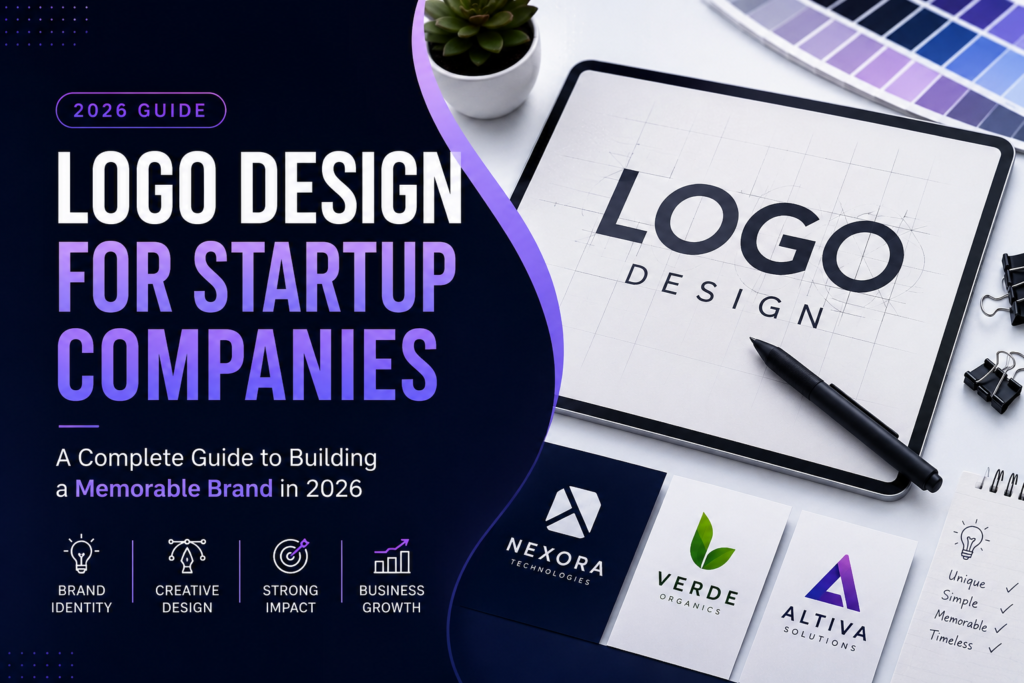
"Modern feature image for a blog about logo design for startup companies, showcasing branding mockups, creative design tools, and a 2026 guide to building a memorable brand identity."
Digital Marketing

Logo Design for Startup Companies: A Complete Guide to Building a Memorable Brand in 2026

Logo Design for Startup Companies: A Complete Guide to Building a Memorable Brand in 2026 Starting a new business is exciting, but standing out in today’s competitive market can be challenging. One of the first and most important investments every startup should make is a professional logo. A well-designed logo is much more than a graphic—it represents your company’s identity, values, and personality. Whether you’re launching a technology startup, an eCommerce store, a local business, or a service-based company, your logo is often the first thing potential customers notice. A memorable logo creates trust, improves brand recognition, and helps your business leave a lasting impression. In this guide, you’ll learn why logo design is essential for startup companies, the different types of logos, design best practices, common mistakes to avoid, and how a great logo supports your overall digital marketing strategy. What Is Logo Design? Logo design involves creating a distinctive visual identity that represents a business, communicates its values, and helps customers recognize the brand instantly. A professional logo combines colors, typography, shapes, and symbols to communicate a company’s identity in a simple yet memorable way. Unlike random graphics, a professionally designed logo is built with strategy and purpose. An effective logo should clearly communicate your brand’s identity and remain recognizable across websites, social media platforms, business cards, product packaging, and marketing materials. Why Every Startup Needs a Professional Logo A startup usually has only a few seconds to make a positive first impression. A professional logo helps customers recognize your business quickly and creates confidence in your products or services. The Basis of Brand Identity Is a Logo Your logo is the face of your business. It appears on every customer touchpoint—from your website and social media profiles to business cards and advertisements—making your brand easier to recognize and remember. Why Logo Design Matters for Startup Companies A thoughtfully designed logo is one of the most valuable assets for building a successful and recognizable business. Here are some important reasons why every startup needs one: A well-designed logo communicates professionalism and encourages potential customers to learn more about your business. Benefits of Professional Logo Design Investing in professional logo design provides long-term value for startups. Improves Brand Credibility People naturally trust businesses that look professional. A polished logo immediately gives your company a more reliable image. Supports Marketing Campaigns Your logo appears across your website, advertisements, social media profiles, email signatures, brochures, and product packaging. A consistent visual identity improves brand recognition. Creates Brand Consistency Using the same logo across every platform helps customers remember your business more easily. Builds Customer Loyalty When customers repeatedly see your logo associated with positive experiences, they begin developing trust and loyalty toward your brand. Works Across Multiple Platforms A professional logo should look great on: Types of Logos for Startup Companies Every startup has unique branding goals, making the choice of logo style an essential part of building a strong brand identity. Wordmark Logos Wordmark logos focus entirely on the business name, using distinctive typography to create a memorable brand image. This style is commonly chosen by brands that want their company name to stand out without using icons or graphic symbols. Lettermark Logos Lettermark logos use initials instead of the full business name, making them ideal for companies with long names. Symbol or Icon Logos Symbol logos represent a business through a distinctive icon or graphic that customers can easily recognize. Combination Logos Combination logos blend a brand name with a visual icon, offering startups a flexible and highly recognizable branding solution. Emblem Logos Emblems place text inside a badge, shield, or circular design. They work well for educational institutions, restaurants, and premium brands. Mascot Logos Mascot logos feature illustrated characters and are often used by businesses targeting families or younger audiences. Key Elements of an Effective Startup Logo A successful logo isn’t created by chance. It combines several important design principles. Simplicity Simple logos are easier to recognize and remember. Memorability A memorable logo makes it easier for customers to recognize and remember your business wherever they see it. Meaningful Colors Every color creates different emotions. For example: Professional Typography Select typography that reflects your brand’s character while ensuring it stays clear, professional, and easy to read. You can explore high-quality fonts on Google Fonts. Scalability Your logo should look equally good on a website favicon and a large billboard. Versatility A professional logo should work in: How to Design Your Startup’s Perfect Logo Creating a successful startup logo requires careful planning, creativity, and a clear understanding of your brand identity. Understand Your Brand Define your mission, target audience, and brand personality before designing. Research Your Competitors Study competitor logos to identify opportunities to create a unique visual identity. Choose the Right Colors Choose a color palette that reflects your brand’s personality and resonates with the audience you want to attract. Select Professional Fonts Your font choices should strengthen your brand identity and improve readability instead of drawing attention away from your overall message. Create Multiple Concepts Design several logo concepts before choosing the strongest one. Collect Feedback Ask team members, clients, or potential customers for honest opinions before finalizing your logo. Test Before Launching Ensure your logo looks great across websites, mobile devices, social media platforms, and printed marketing materials. Common Logo Design Mistakes to Avoid Many startups unintentionally create logos that limit their future growth. Avoid these mistakes: A timeless logo generally delivers better long-term value than one based solely on temporary design trends. Logo Design Priorities for Startup Companies Key Priorities for an Effective Startup Logo Illustrative comparison of the most important factors when designing a logo for a startup company. factor score Simplicity 10 Memorability 9 Versatility 9 Scalability 8 Typography 8 Color Selection 8 Logo Design Trends in 2026 Logo design continues to evolve as customer preferences, branding strategies, and digital experiences change. While following trends can inspire creativity, startups should focus on building a logo that remains timeless and reflects their unique

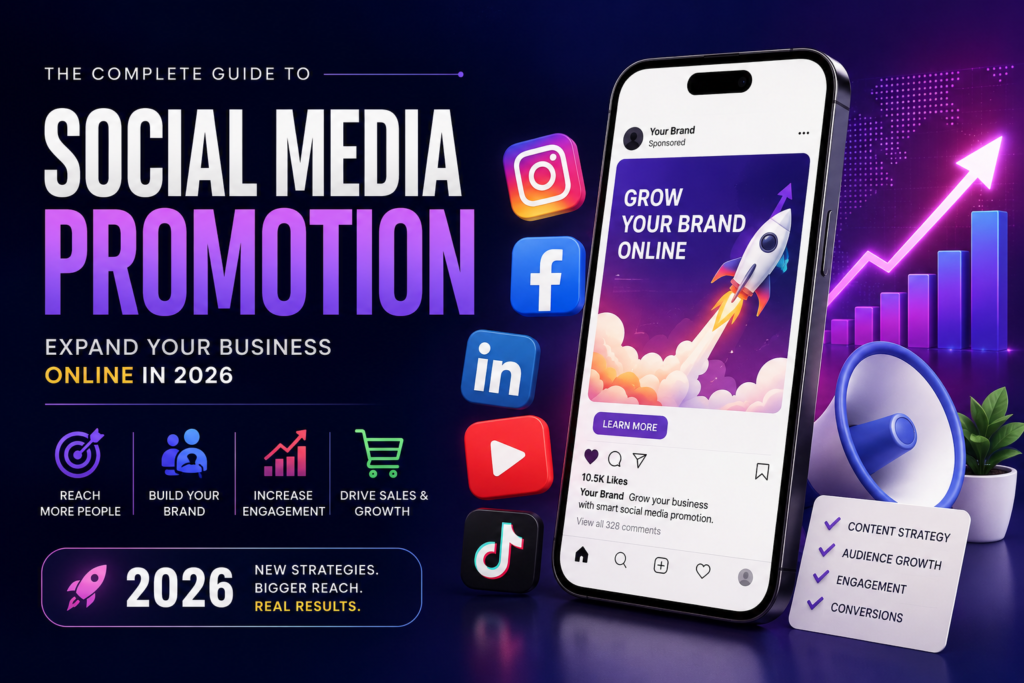
"Featured image for a blog on social media promotion, showing digital marketing tools, social media platforms, and strategies to expand your business online in 2026."
Digital Marketing

Social Media Promotion: The Complete Guide to Expanding Your Business Online in 2026

Social Media Promotion: The Complete Guide to Expanding Your Business Online in 2026 Social media promotion has become one of the most powerful marketing channels for businesses of all sizes. Whether you own a startup, a local business, or a growing eCommerce brand, paid social media campaigns can help you connect with the right audience, strengthen brand awareness, generate quality leads, and boost sales more efficiently than many traditional marketing methods. Unlike organic social media posts, paid social media promotion enables businesses to reach highly targeted audiences based on demographics, interests, online behavior, and location. This ensures your advertisements are displayed to people who are most likely to become customers. In this guide, you’ll discover everything you need to know about social media promotion, including its benefits, top advertising platforms, campaign strategies, common mistakes, and practical tips to achieve better marketing results. What Is Social Media Promotion? Social media promotion is the process of using paid advertisements across social media platforms like Facebook, Instagram, LinkedIn, TikTok, Pinterest, X (formerly Twitter), and YouTube to promote products, services, or brands. Unlike regular social media posts, paid promotions allow businesses to reach audiences beyond their followers while delivering measurable business outcomes such as traffic, leads, and conversions. Paid vs. Organic Social Media Promotion Paid Social Media Promotion Organic Social Media Requires an advertising budget Free to publish content Reaches a wider targeted audience Limited organic reach Delivers faster business growth Builds long-term customer relationships Excellent for leads and sales Good for engagement Offers advanced targeting and analytics Depends heavily on platform algorithms Why Social Media Promotion Matters Millions of people spend hours every day browsing social media platforms. This makes social media one of the best places for businesses to connect with potential customers. Social media promotion helps businesses: Instead of waiting for customers to find your business, paid social campaigns put your brand directly in front of people who are most likely to be interested in your products or services. Benefits of Social Media Promotion One of the biggest reasons businesses invest in social media promotion is its ability to deliver measurable results at a reasonable cost. Cost-Effective Marketing Businesses can start with a small budget and gradually increase spending as campaigns begin generating positive returns. Advanced Audience Targeting Advertising platforms allow you to target users based on: Real-Time Analytics Unlike traditional advertising, social media platforms provide detailed reports showing: Better Customer Engagement People can instantly interact with your ads by liking, commenting, sharing, or sending direct messages, helping businesses build stronger customer relationships. Top Social Media Advertising Platforms Each social media platform provides different strengths, so choosing the right one depends on your marketing objectives, audience, and business goals. Types of Social Media Advertisements Different business goals require different advertising formats. Popular ad formats include: Choosing the right ad format depends on your campaign objective, target audience, and budget. How Social Media Promotion Works Running a successful social media campaign usually follows these simple steps. Step 1: Set Clear Objectives Your goal might be: Step 2: Identify Your Target Audience Select your audience using demographics, interests, online behavior, or previous interactions with your business. Step 3: Create High-Quality Advertisements Your advertisement should include: Step 4: Decide Your Budget Choose either: Start small, evaluate performance, and gradually increase your investment in successful campaigns. Step 5: Analyze and Improve For improved campaign performance, review your results regularly, monitor important KPIs, and optimize your ads based on real performance data. Creating a Successful Social Media Promotion Strategy A successful social media promotion strategy is built on planning, creativity, and continuous optimization. Simply boosting posts without a clear objective often leads to wasted budget and poor results. Follow these proven steps to build campaigns that perform: A well-planned strategy usually delivers better long-term results than simply increasing your advertising budget. Common Social Media Promotion Mistakes Many businesses fail to achieve their desired results because they overlook basic advertising principles. Here are some common mistakes to avoid: Avoiding these mistakes can help improve your campaign performance and increase your return on investment. Best Practices for Better Results Successful advertisers continually test, learn, and improve their campaigns. Follow these best practices: Small improvements made consistently can produce significant long-term growth. Social Media Promotion vs Google Ads Both advertising methods are highly effective, but each serves a different purpose. Social Media Promotion Google Ads Reaches people while they browse social media Reaches users actively searching on Google Excellent for brand awareness Excellent for capturing purchase intent Visual and engaging content Keyword-based advertisements Advanced audience targeting Strong search intent targeting Ideal for engagement and community building Ideal for fast conversions and lead generation Many successful businesses combine both strategies to maximize visibility and increase conversions. Measuring Campaign Success Tracking the right metrics helps you understand what’s working and where improvements are needed. Pay close attention to these key performance indicators (KPIs): Rather than focusing only on likes or comments, prioritize the metrics that directly contribute to business growth and revenue. Future Trends in Social Media Promotion Social media marketing continues to evolve as technology and user behavior change. Here are some trends expected to shape the future: Businesses that adapt to these trends early will be better positioned to stay competitive and reach their target audience effectively. Frequently Asked Questions What is social media promotion? Social media promotion is the use of paid advertising on platforms like Facebook, Instagram, LinkedIn, TikTok, Pinterest, and YouTube to promote products, services, or brands and achieve marketing goals such as awareness, leads, or sales. Which platform is best for beginners? Facebook and Instagram are excellent starting points because they offer flexible budgets, detailed audience targeting, and a large active user base. How much should I spend on social media promotion? There is no fixed budget. Many businesses start with a small daily budget, monitor campaign performance, and gradually increase spending as they achieve positive results. Is social media promotion better than SEO? Both strategies have unique strengths. Social media promotion delivers faster

Scroll to Top